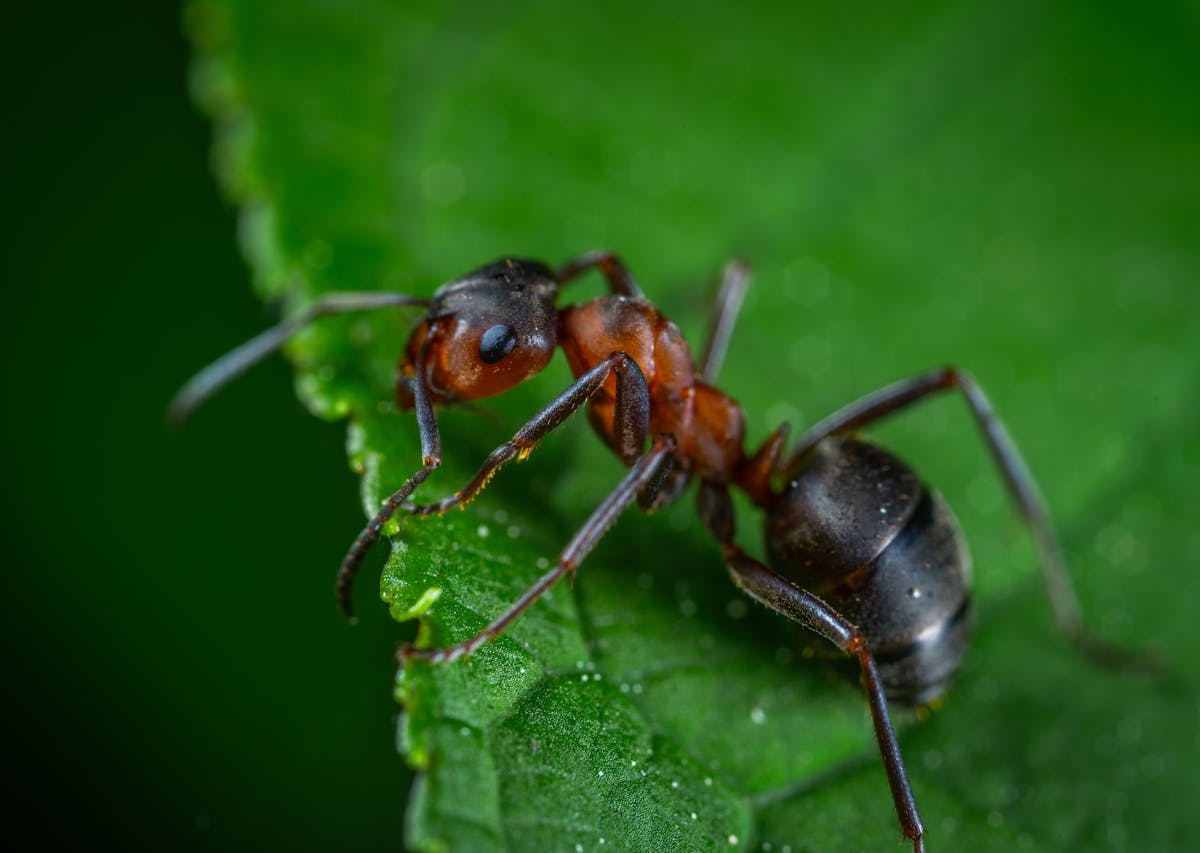
Carpenter Ants: The Most Misunderstood Pest in Westchester and Rockland
Carpenter ants are among the most common pest issues in Westchester and Rockland County — and among the most frequently misdiagnosed. Homeowners routinely mistake carpenter ants for termites, or assume that the large black ants foraging in their kitchen are merely a nuisance rather than a sign of structural damage in progress.
The key distinction: carpenter ants do not eat wood. They excavate it. Worker ants use their powerful mandibles to remove wood fiber, creating smooth-walled galleries and chambers in which the colony lives and raises brood. Unlike termites, they have no interest in consuming the cellulose — they simply move the material out. This biology shapes how infestations progress, what damage looks like, and how treatment must be approached.
Why Westchester and Rockland Properties Are High-Risk
Mature Woodland and Decaying Wood Sources
Parent carpenter ant colonies — the nests containing the queen and the reproductive core of the colony — almost always establish in moist, partially decayed wood. Hollow trees, decaying stumps, logs in contact with soil, and wood piles are ideal parent colony sites. Westchester and Rockland's mature woodland landscape provides an abundance of these conditions within foraging range of residential structures. Foraging carpenter ants can travel 100 yards or more from the parent colony.
Moisture Issues in Older Housing Stock
Both Westchester and Rockland have significant housing stock from the mid-20th century and earlier — homes with original windows, aged soffits and fascia boards, older deck construction, and decades of minor moisture intrusion. Carpenter ants require moisture-damaged wood to establish satellite colonies inside structures. A soft window sill, a deck board holding moisture against the house, or a section of roof soffit with a small leak is all it takes.
High Annual Rainfall and Tree Canopy
The Hudson Valley and lower Westchester receive significant annual rainfall, and the dense tree canopy deposits enormous quantities of leaves, moisture, and organic material against structures. Homes with dense landscaping against the foundation, clogged gutters, or significant shade develop moisture conditions that attract carpenter ants more readily than drier properties.
Parent Colony vs. Satellite Colony: Why This Matters
A parent colony contains the queen, brood, and the majority of workers. It is almost always located outdoors in moist, decayed wood. The parent colony is self-sustaining and can produce new workers indefinitely.
A satellite colony is an extension of the parent colony established in a more protected location — typically inside a warm, heated structure. Satellite colonies contain workers and mature larvae but no queen. When a homeowner sees carpenter ants inside, they are almost always seeing workers from a satellite colony. Treating only the interior leaves the parent colony intact. The interior activity will return within weeks.
Signs of Carpenter Ant Infestation
Frass
Carpenter ant frass is the most diagnostic sign of active infestation. It consists of coarse, sawdust-like wood shavings mixed with insect body parts. Frass is pushed out of gallery openings and typically accumulates in small piles below active galleries — under windows, below baseboards, or in basement corners.
Large Ants Indoors at Night
Carpenter ants are primarily nocturnal foragers. Seeing large (1/4 to 1/2 inch) black ants moving along baseboards or counter surfaces after dark is a reliable indicator. Ants found inside in winter almost always indicate an established satellite colony within the structure.
Rustling Sounds in Walls
Active carpenter ant galleries can produce a faint rustling sound within walls, particularly at night when foraging activity is high.
Swarmers
Winged carpenter ant reproductives swarm in late spring — typically May through June in Westchester and Rockland. Finding large winged ants emerging from baseboards or window frames indicates a mature colony nearby or within the structure.
Professional Treatment: What It Involves
Inspection and Probing
A thorough inspection identifies moisture-damaged wood, likely gallery locations by sound probing, and foraging trails. This step directs treatment to where it will be most effective.
Perimeter Application
A non-repellent residual insecticide applied around the foundation perimeter creates a treated zone that workers must cross when foraging. Non-repellent chemistry ensures that workers track the product back to the colony, creating a transfer effect that reaches the colony without the ants detecting and avoiding treatment.
Void Injection
Where active gallery locations are identified inside structural voids, direct injection of insecticide dust or foam treats the satellite colony at the source. This approach is significantly more effective than broadcast interior application.
Moisture Correction Recommendations
No carpenter ant treatment is permanent if the moisture conditions that enabled the infestation are not corrected. A professional inspection will identify conducive conditions and recommend corrections. Addressing moisture sources alongside chemical treatment dramatically reduces the likelihood of re-infestation.
Protecting Your Westchester or Rockland Home
The Bugs Stop Here provides carpenter ant inspections and treatment throughout Westchester and Rockland County. We serve White Plains, Yonkers, Scarsdale, Chappaqua, Pound Ridge, Bedford, Armonk, Spring Valley, Nanuet, New City, Nyack, Suffern, Haverstraw, and all surrounding communities. Call (631) 563-3900 for an inspection.